01
What an Automatic Standby System Actually Is
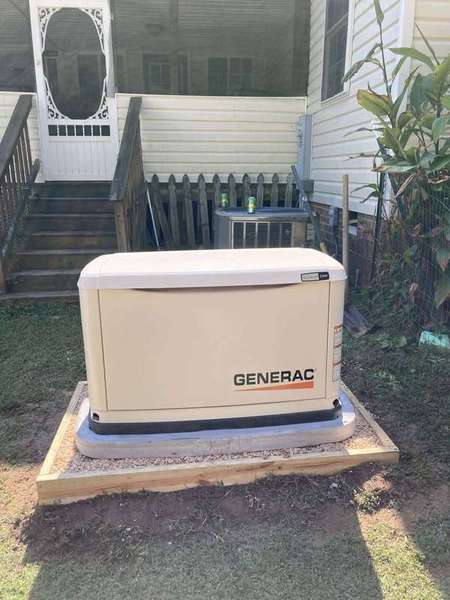
A standby generator is a permanent appliance for your home, not a machine you roll out of the garage. It sits on a concrete pad or composite base next to your house, hard-wired into your electrical panel through an automatic transfer switch (ATS), and connected to a continuous fuel supply — usually natural gas or propane.
Here's the sequence when the power goes out:
- The transfer switch senses the utility outage — typically within seconds.
- The generator starts itself, warms up, and stabilizes voltage.
- The switch transfers your home's circuits to generator power. No one touches anything.
- When utility power returns and stays stable, the switch transfers back and the generator cools down and stops.
Most owners set their unit to run a brief weekly self-test — ten or so minutes — so the engine stays exercised and any problem announces itself on an ordinary Tuesday, not during a hurricane.
02
Fuel Choices: Natural Gas or Propane
Natural gas
If your home already has natural gas service, this is the most convenient option. The fuel supply is effectively unlimited — no refueling, no tanks to monitor — which matters during a week-long outage when propane trucks can't get through flooded streets.
Propane
The standard choice where natural gas isn't available. Propane stores indefinitely without degrading (unlike gasoline), and a properly sized tank can carry a household through a multi-day outage. We'll help you think through tank sizing and placement during the site visit.
We coordinate with your gas provider or propane supplier so the fuel side is handled correctly alongside the electrical work.
03
Placement, Pad, and Permitting
A standby unit has to live in the right spot: close enough to the panel and gas supply for efficient wiring and plumbing, but with proper clearance from windows, doors, and property lines per local code. We handle the full installation:
- Site evaluation. We walk your property, check panel capacity and condition, verify gas availability, and identify the best placement that meets setback and clearance rules.
- Pad and placement. The unit is set on a level concrete pad or approved composite base, positioned for airflow, service access, and noise considerations.
- Electrical work. The automatic transfer switch is installed at the panel, circuits are connected per the agreed plan, and everything is wired, labeled, and tested.
- Fuel connection. Gas plumbing is run to the unit with proper shutoffs and pressure regulation, coordinated with your fuel provider.
- Permits and inspection. Standby installations require electrical and sometimes mechanical permits in Treasure Coast jurisdictions. We pull the permits and schedule the inspections.
- Startup and training. We commission the unit, set the exercise schedule, and show you the controller — what the lights mean, how to check status, and when to call us.
Live in an HOA community? Many Port St. Lucie neighborhoods have rules about generator placement and screening. Bring your HOA guidelines to the site visit and we'll plan around them.
04
Built for Hurricane Season
The Treasure Coast's outage pattern is what standby generators are made for: a storm knocks out power for days, you're possibly evacuated or it's 2 a.m., and nobody is home to start anything. A standby unit doesn't care — it starts itself whether you're watching or not. That means the refrigerator keeps running, the sump or lift station keeps pumping, the security system stays online, and you come home to a house that never went dark.
The catch is lead time: standby installations involve permits, pad work, and inspections, so they're planned in weeks, not days. The right time to install one is months before hurricane season — not the week a storm is named.
05
Frequently Asked Questions
How is a standby generator different from a portable?
A portable is a machine you set up and start yourself each outage; a standby is permanently installed, starts automatically, and runs on natural gas or propane instead of gasoline you have to refuel. Standby costs more upfront but requires zero effort during the outage itself.
Will it power my whole house?
That depends on the unit's size and how we configure it. Standby systems can be set up to carry selected essential circuits or, with a large enough unit, the entire home. We plan the circuit list with you during the site visit so there are no surprises.
How long can it run continuously?
On natural gas, essentially as long as the utility supply holds. On propane, run time depends on tank size and load — that's why we size the tank to your expected outage needs during planning.
Is it loud?
Modern standby units are much quieter than portable generators — roughly the level of a normal conversation at a distance, and quieter inside the house. Placement and distance from bedrooms matter, and we factor that into the site plan.
What maintenance does a standby generator need?
An annual service — oil and filter change, air filter, spark plugs, battery check — plus keeping the weekly exercise cycle enabled. We offer maintenance visits so it's one less thing to remember.
Do I need permits?
Yes. Electrical permits are standard, and some jurisdictions require mechanical or fuel-gas permits as well. We handle the permit applications and coordinate inspections as part of the installation.
Can it be installed if I don't have natural gas?
Yes — propane is the standard alternative and works just as well. We'll discuss tank options and placement during the site evaluation.
How long does the installation take?
The on-site work itself is usually one to two days. Permitting and scheduling add time on either end, so from site visit to commissioning typically takes a few weeks.
06
Service Areas
Standby generator installations across the Treasure Coast:
- Port St. Lucie
- Fort Pierce
- Stuart
- Jensen Beach
- Palm City
07
Who You're Calling
Service provider: Florida Electrical and Fire Alarm LLC
Phone: (561) 552-3753
Email: services.floridaelectrical@gmail.com
License: Florida Electrical License #ER13016161
Hours: Monday–Saturday 8 a.m.–5 p.m.; 24/7 emergency service
Service-area business serving Port St. Lucie, Fort Pierce, Stuart, Jensen Beach, and Palm City. No street address — we come to you.
08
Request a Site Visit
Every standby installation starts with a look at your property. Tell us about your home and we'll schedule it.